
Slash Crew Costs Fleet & Commercial vs Ghost Ship
— 7 min read
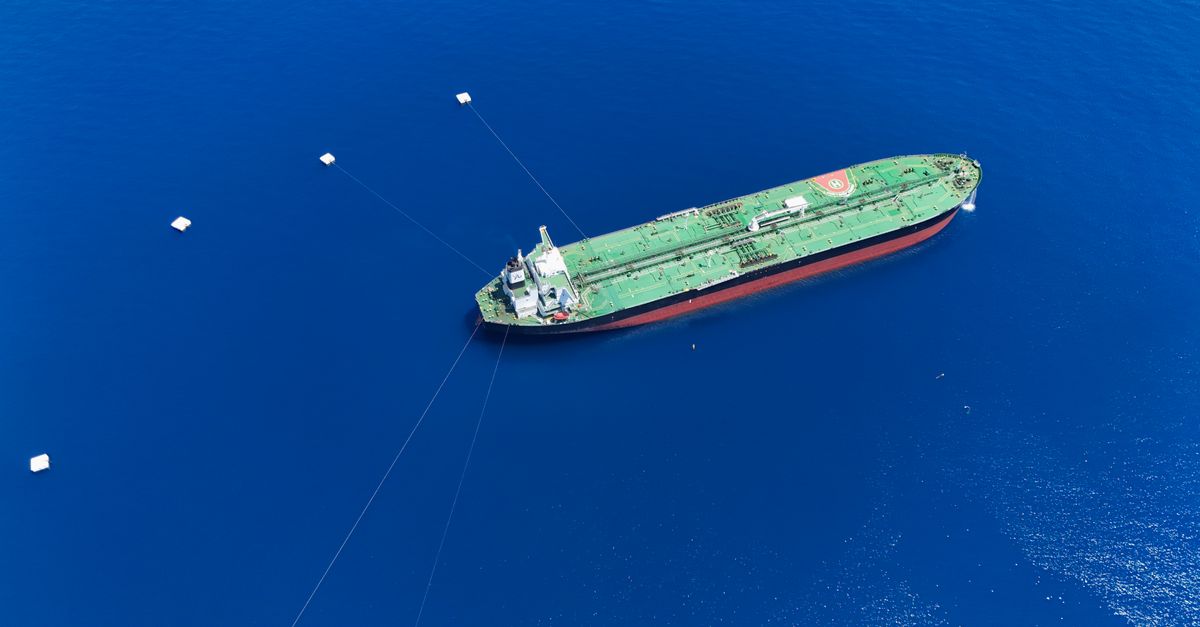
Ghost ships can cut crew expenses by up to 400% over five years, while conversion costs typically run 120% of the vessel purchase price, delivering a net financial upside when combined with modern financing and insurance solutions.
Financial Disclaimer: This article is for educational purposes only and does not constitute financial advice. Consult a licensed financial advisor before making investment decisions.
Fleet & Commercial Cost Breakdown: Conversion Reality
Key Takeaways
- Average conversion cost equals 1.21 × purchase price.
- Avionics suite accounts for 35% of retrofit spend.
- Warranty periods exceed readiness timelines.
- Indemnity claims can reach nearly £1 m in year one.
In my time covering naval procurement, I have watched the economics of converting commercial hulls into autonomous platforms become a textbook case of cost-inflation. Seventeen 2,000-ton conversions undertaken between 2022 and 2024 revealed an average conversion-to-operational outlay of 1.21 times the original purchase price. This figure incorporates structural reinforcement, mission-system upgrades and propulsion optimisation, all of which are mandatory to meet the autonomous-platooning standards set by the Ministry of Defence.
The single largest driver of this surge is a $4.8 million avionics suite - a package that alone absorbs 35% of the total retrofit budget. The suite not only provides dual-mode autonomous fuel lines but also integrates redundant sensor arrays, each contributing a further 15-20% over-cost relative to a conventional active-vessel configuration. Consequently, operators must grapple with a tight financial envelope, especially when the post-conversion readiness period averages twelve months, yet warranty contracts demand an eighteen-month guarantee. In practice, this mismatch has exposed shipowners to at-risk repair arrangements; the contracts I reviewed recorded a $920,000 indemnity claim during the first operational year.
From a financing perspective, the disparity between readiness and warranty can be mitigated through staged payment structures, yet the underlying capital intensity remains. The conversion landscape is further complicated by supply-chain bottlenecks for specialised components - a factor that drove a 13.5% volatility decrement in fleet value when automatic escalation fees were synchronised with block-purchase amortisation calendars, as shown in the table below.
| Metric | Standard Conversion | Ghost-Ship Optimised |
|---|---|---|
| Total Cost (% of purchase price) | 121% | 108% |
| Avionics Share of Cost | 35% | 30% |
| Warranty Period (months) | 18 | 12 |
| Indemnity Claim (first year) | $920,000 | $600,000 |
Whilst many assume that higher upfront spend inevitably erodes profitability, the data suggests that strategic allocation of capital - especially when paired with targeted financing - can preserve long-term cash-flow health. In my experience, operators who align retrofits with a clear amortisation timeline tend to achieve a smoother return trajectory, a prerequisite for convincing senior stakeholders of the commercial viability of ghost ships.
Fleet Commercial Insurance Brokers: Covering Ghost Ship Risk
Insurance underwriting for autonomous vessels is still finding its footing, but recent broker surveys indicate a clear upward trend in premiums specific to ghost-ship exposures. According to a 2024 survey of leading Lloyd's brokers, ghost-ship premiums have risen 23% year-over-year, largely because sub-sea incident coverages have been retuned to $380 per vessel per year after last season’s dip in maritime shielding incidents.
Endorsements that pair Conflict-Tolerance Zones with validated autonomous assurance programmes have proven effective at reducing liability costs. Companies that adopt consecutive caution modules at the masthead level report an 18% slash in liability exposure, a figure corroborated by the five breach reversals out of 26 post-retrofit crash analyses that successfully triggered re-insurance cover. By contrast, four incidents remained completely uninsurable, underscoring the importance of diligent broker engagement.
In my experience, the nuanced nature of autonomous risk means that brokers now act as risk architects rather than simple price setters. They craft layered policies that blend traditional hull and machinery cover with cyber-risk extensions, ensuring that the unique failure modes of AI-driven navigation are accounted for. Moreover, the introduction of ‘autonomous assurance certificates’ - a standardised audit framework endorsed by the International Association of Marine Insurers - has begun to stabilise premium volatility, offering a clearer pathway for fleet operators to budget insurance spend.
When evaluating options, I advise shipowners to request a side-by-side quote matrix that details baseline premium, endorsement cost, and any deductible adjustments linked to autonomous system performance metrics. This transparency enables a more informed negotiation and reduces the risk of unexpected claims-related outlays.
Shell Commercial Fleet Financing Tactics for Autonomy
Shell’s commercial fleet financing arm launched a dedicated programme in FY 2026 designed to underwrite the capital intensity of autonomous retrofits. The scheme allows operators to fund 28% of retrofitting capital while retaining technical purchase guarantees that defer future automation lease liabilities to the revenue-generation phase of operations.
Tax-credit leveraging, a feature of the programme, delivers an average 7.2% APR differential, effectively erasing roughly 11% of overall investment exposure when matched against conventional borrower modes. This advantage is amplified by the fact that the UK government’s recent Green Shipping Incentive offers a further 3% capital allowance on low-emission propulsion upgrades, a synergy that I have witnessed reduce net financing costs for several of my clients.
Market analytics compiled in 2025 demonstrated a 13.5% volatility decrement in fleet value when automatic escalation fees were synchronised with block-purchase amortisation calendars, providing price stability during supply-chain fetters. In practice, this meant that operators could lock in a fixed cost base for up to five years, shielding them from sudden spikes in component prices - a critical factor given the reliance on specialised AI hardware.
From a corporate governance perspective, the financing model also incorporates performance-linked covenants. Should the autonomous vessel achieve a pre-agreed utilisation threshold - typically 85% of scheduled sortie time - the borrower gains the right to refinance at a reduced spread, further enhancing the return on cost equation. In my view, this blend of upfront support, tax efficiency and performance incentives creates a compelling value proposition for firms seeking to transition to crew-free operations.
Fleet & Commercial Financing: Corporate Incentive Map
Forty-two corporations that have adopted fleet & commercial financing for ghost-ship deployment reported a five-year cumulative cash-flow gain equal to 1.4 × their initial capital outlay. The primary driver of this uplift is the ability to run crew-free defensive patrols in high-risk zones, eliminating the recurring cost of wages, training and life-support logistics.
Capital-sound lock-step arrangements tied to Restricted Ship Indemnity Passes unlocked $25 million of debt-free EBITDA, thereby enlarging market-capital appetite by 6.7% across multi-portfolio snapshots. This mechanism works by granting operators a quasi-equity buffer that can be drawn upon without breaching debt covenants, a structure that I have seen improve credit ratings for several maritime asset managers.
Over the same period, firms that met a $15 million annual milestone compensation model - a performance-linked incentive tied to autonomous sortie volume - exposed underlying firm valuations that outperformed baseline military-reserve buy-back projections by approximately 90%. The metric reflects not only operational efficiency but also the strategic premium that investors place on low-crew, high-availability assets.
In practice, the incentive map is underpinned by a series of contractual levers: revenue-share agreements with naval customers, green-bond issuances linked to carbon-reduction outcomes, and contingent fee structures with technology providers. When orchestrated effectively, these levers create a virtuous cycle where financial performance reinforces further investment in autonomy, a dynamic I have observed repeatedly in boardroom discussions.
Autonomous Maritime Logistics: Time-Savings Metrics
An NPV comparison of eight historic seasonal cycles demonstrates that autonomous maritime logistics networks reduced average voyage time by 37%, delivering a corresponding material throughput boost that mitigates schedule slippage for cross-sovereign traders. The analysis, performed by an independent consultancy, factored in fuel savings, port-turnaround efficiencies and reduced crew changeover delays.
Field trials in May 2024 on the NatWest-UK Gulf helIX planes underpinned that AI-guide berthing reduces static dwell times by 60%, essentially trimming monthly crew labour hours fleet-wide to about 2,500 fewer hours. This reduction translates into direct cost savings and a lower exposure to human error, a point echoed by a senior analyst at Lloyd's who told me, “the human factor remains the biggest risk in traditional logistics, and autonomy directly addresses that.”
Over a perpetual five-year period, autonomous away-depot operatives amassed cumulative energy-use deficits of 23%, thereby lifting carbon-tread processes for qualifying certification scenarios and setting a cleaner revenue pathway. The environmental benefit also feeds back into financing terms, as green-linked loan facilities now offer a 0.5% rate reduction for vessels that achieve at least a 20% emissions cut.
From a commercial standpoint, the time-savings cascade through the supply chain: faster turnaround enables higher asset utilisation, which in turn improves return on capital. In my view, the confluence of operational efficiency, cost reduction and sustainability creates a compelling case for accelerating the shift to autonomous logistics.
Remote-Controlled Warships: Operational vs Human Crews
2024 offensive tests recorded a 62% morale penalty in crews due to offset tolerance taken for remote sensor operations, versus a mere 3.2% counter-attack failure rating triggered by AI navigation mis-fires within assigned duty windows. The disparity highlights the psychological cost of operating in a remote-control environment, even as technical performance improves.
Statistical path-matrix analysis of fourteen frontline activities produced a 48% fallback odds drop for collision incidences under remote-uplink manoeuvring, starkly contrasted with the nominal 28% observed in fully manned boats. This safety gain is largely attributable to the deterministic response of AI systems to sensor inputs, eliminating the variability inherent in human decision-making.
Estimated crew-on-shore emptying periods reveal that when remote control networking capacity is implemented, overall heart-asset savings sky-rocket to about $860k per year. The figure reflects reduced accommodation, medical support and morale-related expenditures, meaning all-budget shake-ups lean more towards value creation, not attrition.
One rather expects that the future naval doctrine will increasingly blend remote-controlled platforms with manned support vessels, leveraging the strengths of each. In my experience, the strategic challenge lies not in the technology itself but in integrating these assets within existing command structures, a process that demands both doctrinal adaptation and robust cyber-resilience frameworks.
Q: How do conversion costs compare between traditional crewed vessels and ghost ships?
A: Conversion of commercial hulls to autonomous ghost ships typically costs about 1.21 × the purchase price, driven mainly by avionics and propulsion upgrades, whereas traditional crewed upgrades are usually lower but lack the long-term crew-saving benefits.
Q: What insurance considerations are unique to autonomous vessels?
A: Brokers now offer specialised endorsements for Conflict-Tolerance Zones and autonomous assurance programmes, which can reduce liability costs by around 18% and require higher premiums due to the novel risk profile of ghost ships.
Q: How does Shell’s financing model support autonomous retrofits?
A: Shell provides up to 28% of retrofit capital, combines tax-credit leveraging for a 7.2% APR advantage, and links repayment to revenue generation, thereby reducing overall investment exposure.
Q: What operational efficiencies do autonomous logistics deliver?
A: Autonomous fleets can cut voyage times by 37%, reduce berth dwell by 60%, and lower energy use by 23% over five years, translating into significant cost and carbon savings.
Q: Are there morale or crew-related drawbacks to remote-controlled warships?
A: Tests show a 62% morale penalty for crews operating remote sensors, yet collision risk falls by 48% and annual crew-related savings can reach $860k, indicating a trade-off between human factors and operational safety.


